

Most of us have a favourite mug, or maybe a few. We don’t really think about it. We simply open the cupboard and instinctively reach for the same one every morning, or every evening before making a cup of tea.
As designers (Carla & Jordan from Studio Joachim-Morineau) creating porcelain tableware, we’ve always been fascinated by this small daily ritual. What makes one mug become the mug? Why do we choose one cup for our morning coffee, another for an after-lunch espresso, and perhaps a different one for a relaxing evening drink?
After designing several collections and producing hundreds of handmade porcelain cups in our workshop in Eindhoven and Nantes, we’ve learned that choosing a coffee mug isn’t only about size or appearance. It’s mostly about finding an object that fits naturally into your everyday life. In this small guide we share what actually matters: cup sizes in millilitres, shape, material, and the practical details nobody mentions until you live with a mug daily.
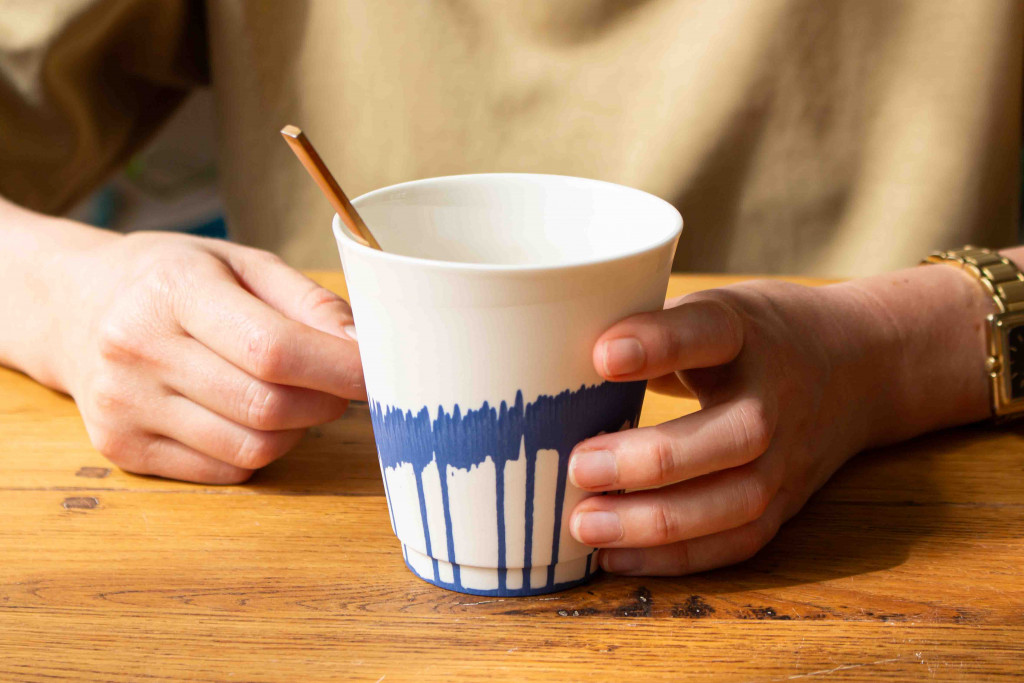
There is no perfect coffee mug (but there is one for you)
We don’t believe there is one perfect coffee mug shape. Instead we think there are different mugs for different people and different moments.
You need to ask yourself a few questions: Do you like to feel the warmth of your drink through the cup? Do you need something that fits easily in the dishwasher? Do you enjoy sitting down with a large coffee for half an hour, or do you drink a quick espresso before leaving the house? Even your coffee machine influences which cup works best for you.
A coffee mug is more than a container. It becomes part of a daily ritual, and that’s why the “perfect” mug is different for everyone. Still, there are a few guidelines that make choosing much easier: start with a size for the coffee you actually drink.
What size should a coffee mug be? (From espresso to lungo)
If we had to give one piece of advice, it would be this: choose your mug according to the coffee you drink most often. Here are the sizes we work with as tableware designers:
| Drink | Typical drink volume | Ideal cup capacity |
|---|---|---|
| Ristretto / Espresso | 15 to 60 ml | 60 to 90 ml |
| Cortado / Macchiato | 60 to 120 ml | 90 to 150 ml |
| Cappuccino / Flat white | 150 to 200 ml | 160 to 220 ml |
| Lungo / Filter coffee | 180 to 250 ml | 250 to 300 ml |
| Tea | 250 to 350 ml | 300 to 400 ml |
For espresso drinkers:
An espresso is small and concentrated, with intense flavours, but because of its size it also cools down quickly. A small cup helps maintain the temperature and keeps the proportions right. When we designed our handmade porcelain espresso cup we deliberately made it slightly taller than average, while still leaving enough room for a splash of milk if you’re more of a cortado drinker.
For cappuccino, flat white and lungo drinkers:
A larger cup will suit you better. These coffees contain more milk or water, and a wider opening gives the foam space to develop and lets the aromas unfold. It also gives baristas room for latte art, though we’ll happily leave that part to them. We don’t currently make dedicated cappuccino bowls with a rounded bottom, but our taller coffee mugs are aimed for those drinks, from a lungo in the morning to tea in the afternoon.
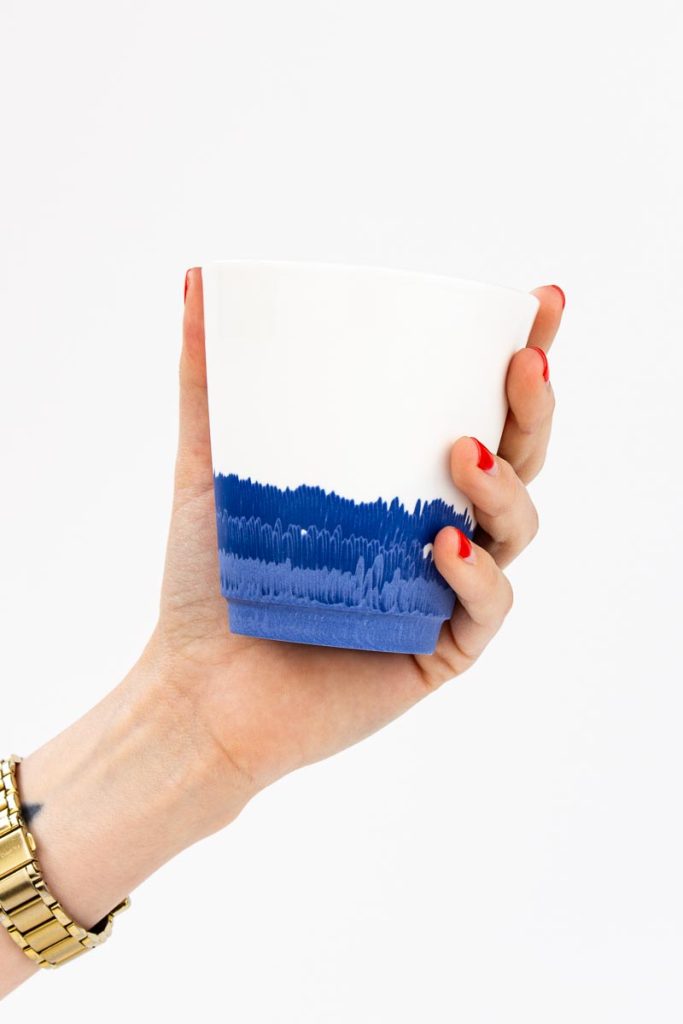
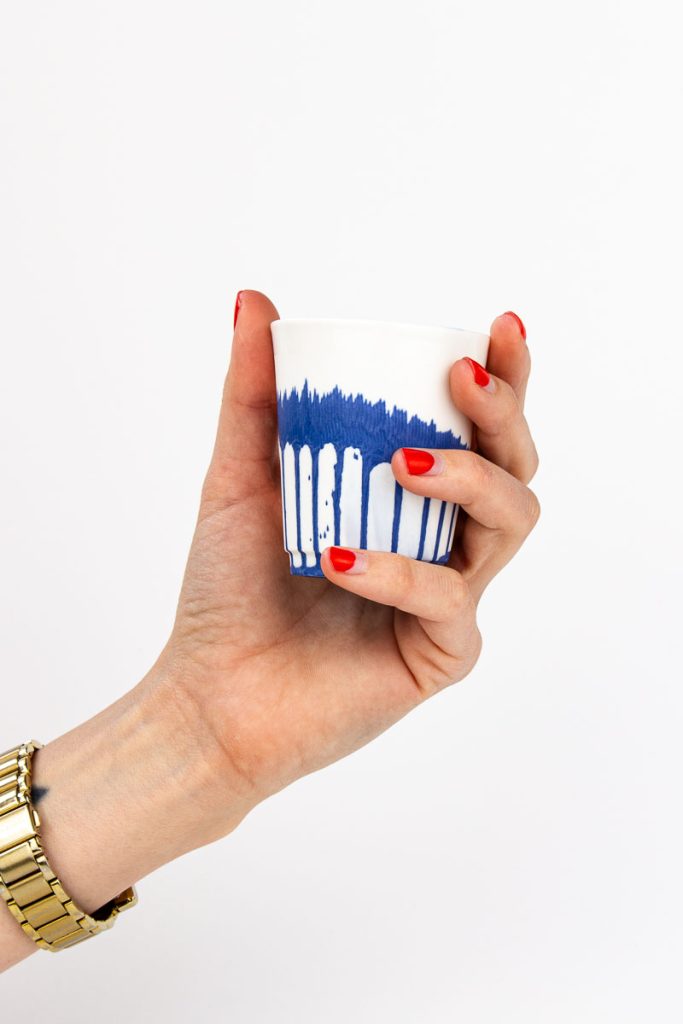
Does the shape of a mug affect your coffee?
Absolutely. A mug may seem like a simple object, but changing its shape by only a few millimetres can completely transform the experience of using it. During the design process we often adjust the height, diameter or angle of a cup ever so slightly. Those tiny changes can make a mug feel lighter, more balanced, or simply more comfortable to drink from. A few things we pay attention to:
- The opening: it influences how aromas reach your nose. A wider rim releases more aroma; a narrower one concentrates it.
- The height: it affects how easily you hold the cup and how fast the drink cools.
- The wall thickness: it changes how the cup feels against your lips and how long it keeps your coffee hot.
- The weight and balance: it decides whether a mug feels pleasant after a hundred uses, not just the first.
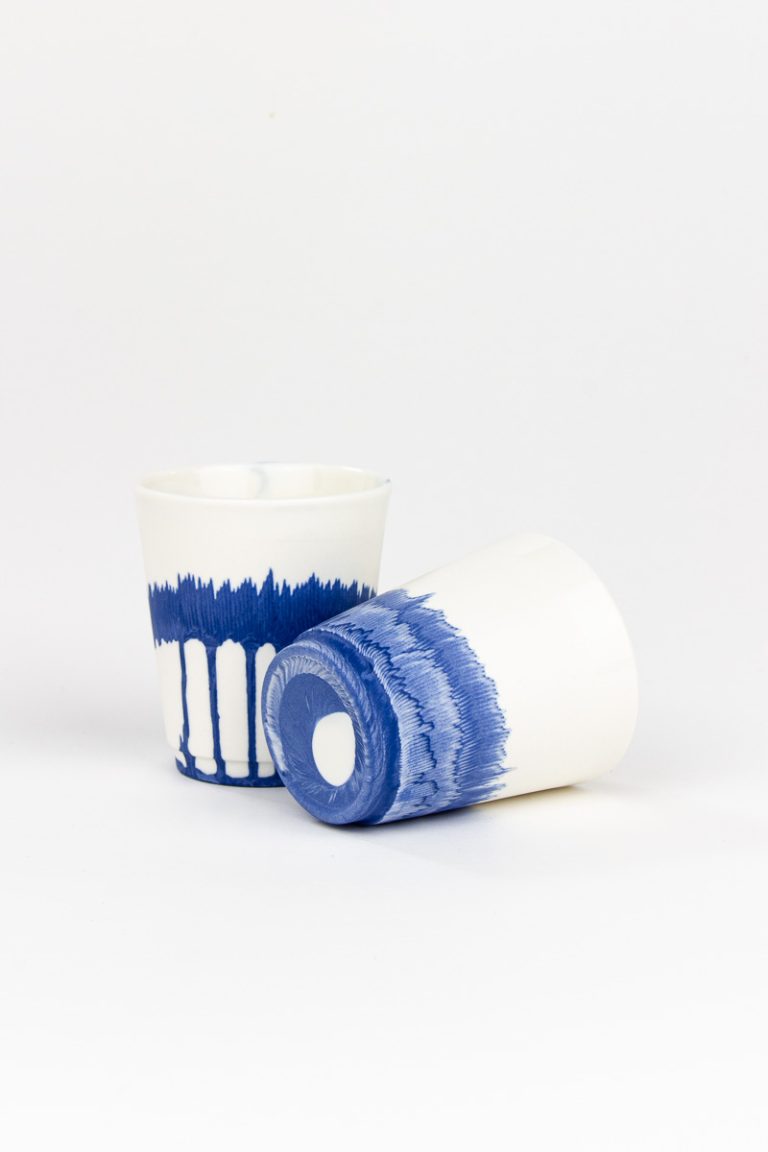
Of course, aesthetics matter too. If you simply love the shape and style of a mug, that’s already a very good reason to choose it. For our MOCA tableware collection, we wanted every piece, from mugs to bowls and plates, to share the same visual language: clean lines, gentle angles, a thin rim, and the unique dripping patterns that run across the whole family.
Practicality is just as important. We design our cups to stack easily, fit in the dishwasher and feel comfortable in the hand every single day. Beautiful objects should also be practical, otherwise they stay on the shelf instead of becoming part of your routine.

Porcelain vs stoneware mugs: which is better?
People often ask us why we chose porcelain instead of another clay. Here is a comparison:
| Porcelain | Stoneware | |
|---|---|---|
| Wall thickness | Thin and refined | Thicker, more rustic |
| Weight | Light | Heavier in the hand |
| Heat retention | Good; thin walls warm up fast | Very good; keeps heat longer |
| Durability | Very dense and strong when high-fired | Strong, slightly more porous |
| Look and feel | Bright white, fine surface | Earthy tones, textured |
| Best for | Espresso, refined tableware, colour work | Big rustic mugs, slow drinking |
We love porcelain because it combines refinement with strength. It allows us to create really thin, light and elegant cups without sacrificing durability, which is much harder to achieve with most other ceramic bodies.
We also love its natural whiteness. Porcelain is a beautiful blank canvas for the coloured pigments and oxides we use in our unique dripping process. Every pattern stands out, and the colour of your coffee or tea looks rich and inviting against the white surface.
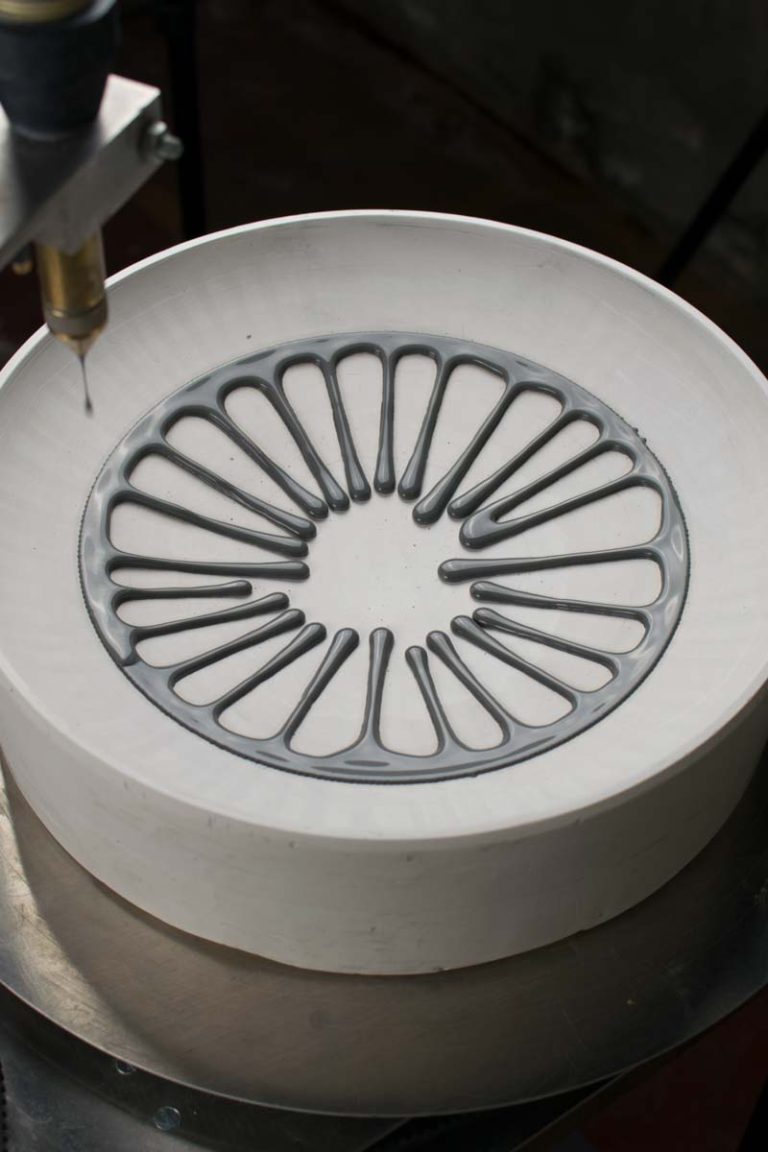
Porcelain also becomes naturally non-porous when fired at a high temperature. We still apply a thin glaze inside the cup and on the rim for an even smoother drinking experience, but the material itself is already incredibly dense. And finally, porcelain simply works best in our dripping machine: its fluidity creates the patterns that make every MOCA cup one of a kind. If you’re curious how that works, we explain the whole process in our article about the dripping technique.
That said, we genuinely appreciate stoneware (we have a huge collection of cups from friends too!). If you enjoy a heavier, more rustic mug that holds heat for a long time, stoneware is a wonderful choice, and there are many talented ceramicists where you could find beautiful pieces. Supporting local makers is something we’ll always encourage, you could even ask for a custom-made wheel thrown one!
Is a handmade porcelain mug practical for daily use?
Yes, if it’s designed for it. When we describe our cups as handmade, we don’t mean fragile, and we don’t mean that every cup is completely different. Quite the opposite.
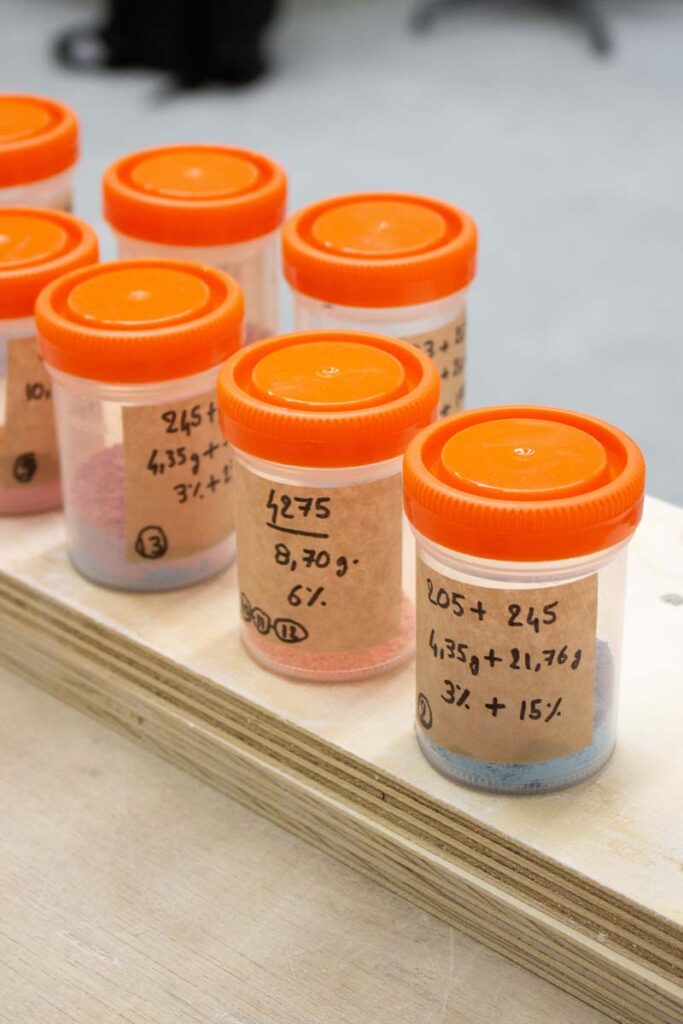
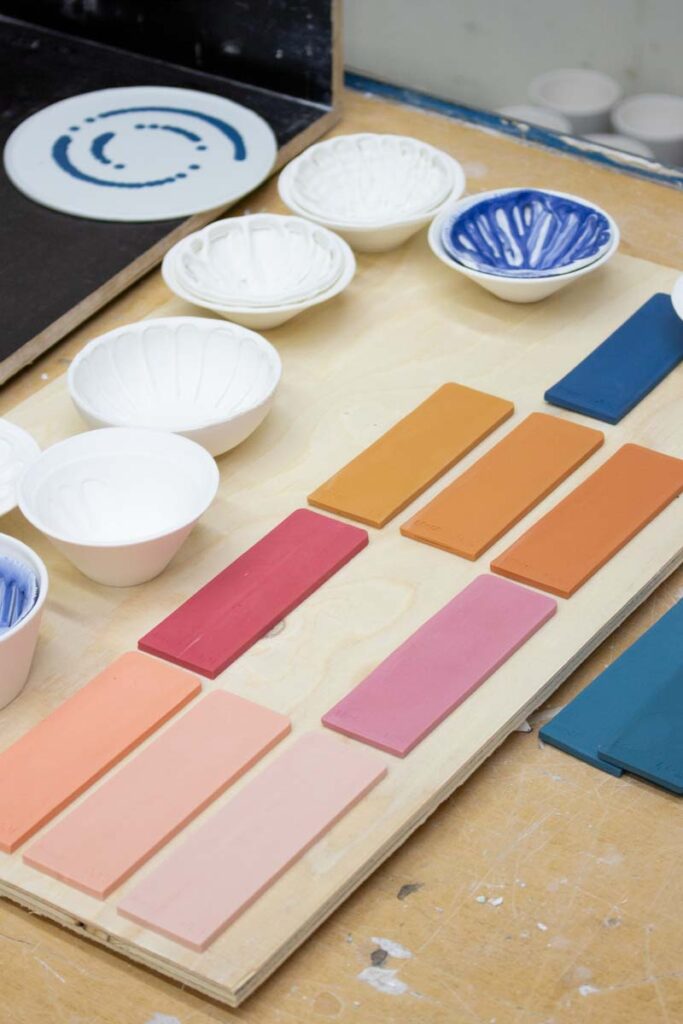
We carefully design every shape, make our own plaster moulds, prepare the porcelain slip, cast each piece, sand it by hand, glaze it and fire it in our workshops in Eindhoven (Carla) and Nantes (Jordan). Our goal is to produce cups with the same proportions, the same comfort and the same quality every time. They stack, they go in the dishwasher, and they’re made to be used daily, not displayed! We improved our quality, changed recipes, shapes, over the years to achieve such results!
Where we embrace variation is in the decoration / style. Our unique dripping process is intentionally unpredictable: once the porcelain begins to flow from the machine nozzle, we let gravity do part of the work, so no two patterns are ever exactly the same. One thing we’ve noticed over the years is that people rarely choose the “perfect” pattern. More often, they’re drawn to the cup with the unexpected drip, the design that somehow speaks to them. We love that. It’s exactly why we let each pattern develop naturally. We know people really bond with the cup they choose and care for!
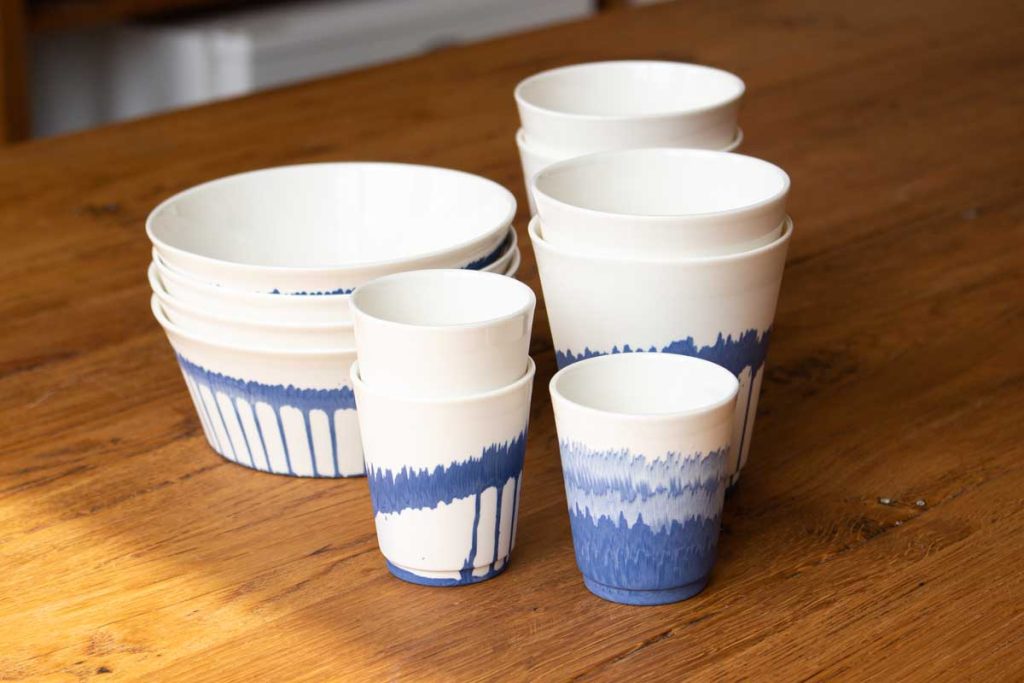
A mug becomes part of your daily life
In the end, we still believe there is no perfect coffee mug. There is only the mug that fits your life. The one that feels comfortable in your hands. The one you instinctively reach for every morning. The one that quietly becomes part of your breakfasts, your workdays, or your slow Sunday mornings. (And we hope you will pick ours for that!)
But a mug can also become something more: a conversation starter. A friend might notice it and ask where you found it, who made it, or how its pattern was created. Suddenly the object has a story to tell, one that connects the maker, the owner and the moments shared around it. If one of our cups can become that mug for someone, then we’ve truly achieved what we set out to do as designers. We’re not only designing porcelain tableware; we’re designing small everyday rituals.
Carla & Jordan from Studio JOACHIM-MORINEAU
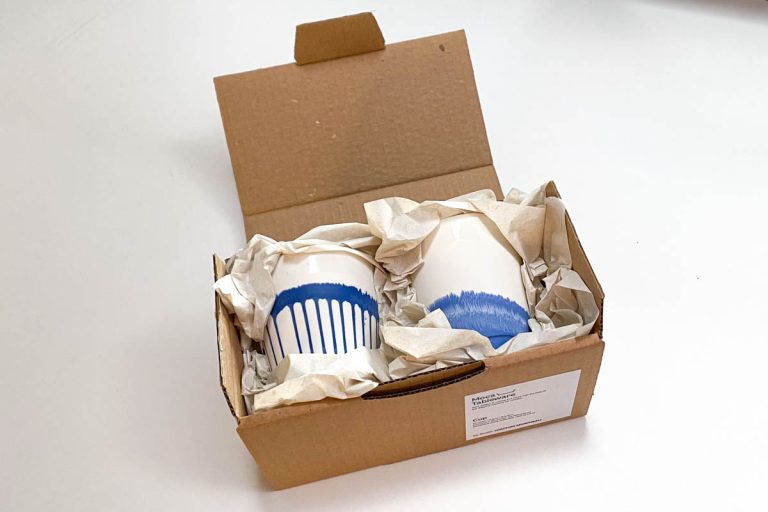
Find your mug: Browse our webshop or see below a few cup options. Every piece is cast, glazed and fired in our workshop, and no two dripping patterns are alike. Looking for a present instead? Have a look at our gift guide.
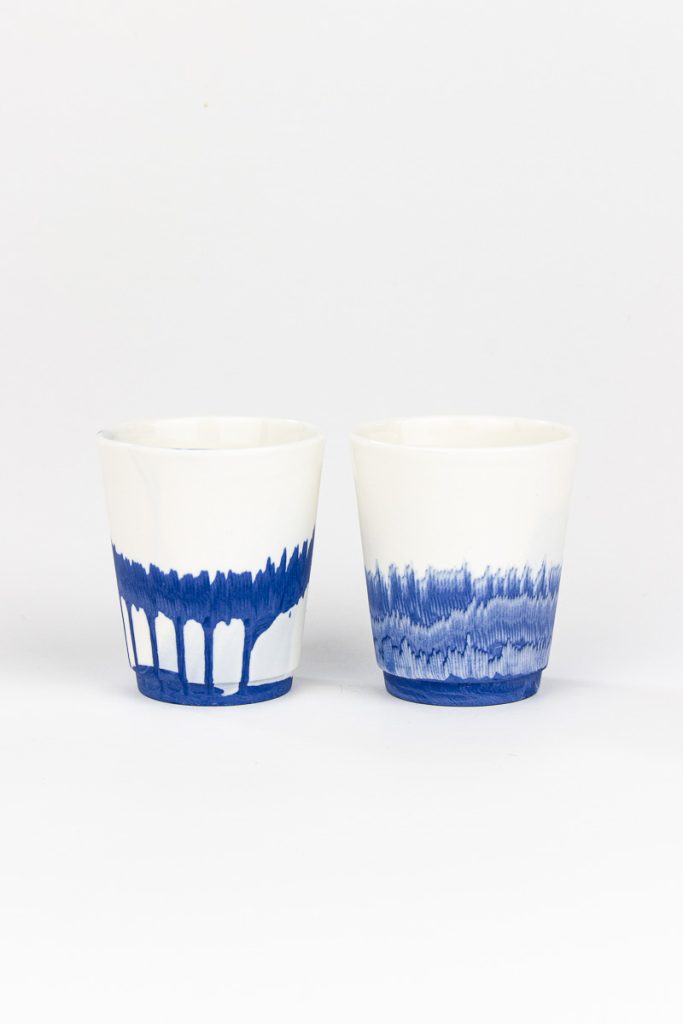
Handmade Ceramic Espresso Cups – Set of 2, Unique Blue Pattern | MOCA – One of each
8 in stock (can be backordered)
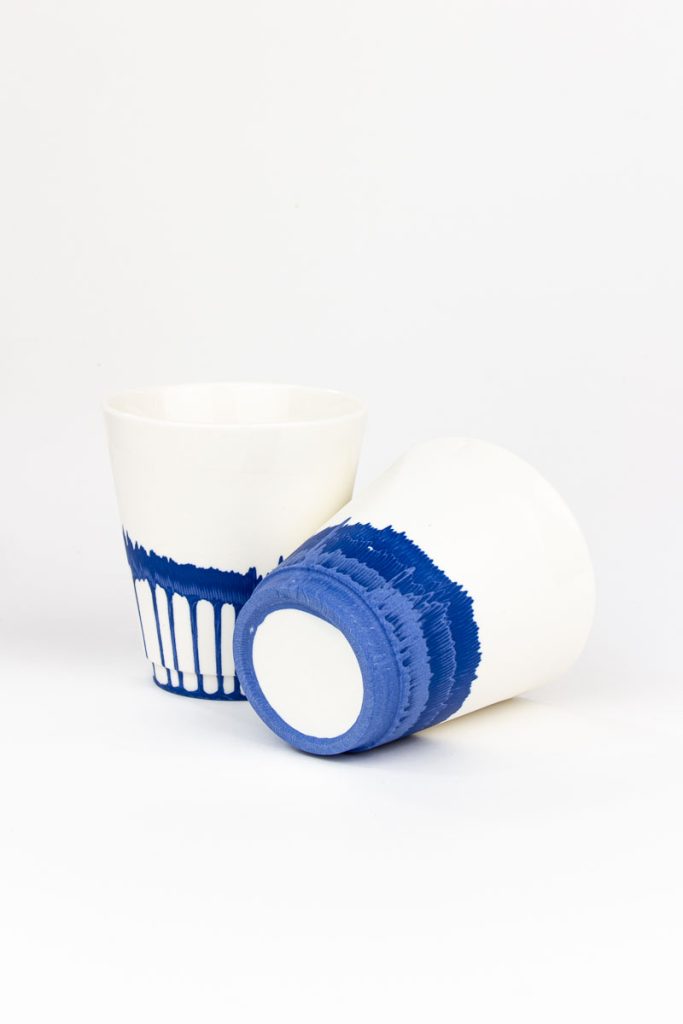
An espresso itself is 15 to 60 ml, so the ideal espresso cup holds 60 to 90 ml. That leaves the right proportions for crema and keeps the coffee hot, with a little room for milk if you prefer a cortado.
It depends on your drink: 60 to 90 ml for espresso, 160 to 220 ml for cappuccino or flat white, and 250 to 300 ml for lungo or filter coffee. Choose the cup that matches the coffee you drink most often.
Neither is objectively better. Porcelain is thinner, lighter and brighter white, ideal for refined cups; stoneware is heavier and holds heat longer, ideal for big rustic mugs. We work in porcelain because it lets us make thin, strong cups and it suits our dripping technique.
Ours are. High-fired porcelain is naturally dense and non-porous, and we glaze the inside and rim of every cup. We design our cups to be stacked, washed and used every day.
The shapes are identical, cast from our own plaster moulds, but the decoration is made with our dripping machine. Once the coloured porcelain starts to flow, gravity finishes the pattern, so no two cups are ever the same.